Grace and Truth

…all the words of this life…


6 Comments

Gay Marriage and the Church

One thing that bugs me about the debate over gay marriage is that when both sides bring the Bible into the discussion they always seem to miss something. And it’s something HUGELY important.

One side says it is about justice and equality. The other side says it is about the family and the rights of the child. Both sides are passionate, heated and emotional.

But it is important to see something bigger is going on: whilst there is much emotional rhetoric on both sides, the battle is actually spiritual.

There are two people who care more about marriage than even the most verbal and passionate of activists:

These are of course God and Satan.

I have heard both sides discuss Leviticus 18 & 20, the story of Sodom and of course Romans 1. I’ve heard Christians and non-Christians, gay and straight argue these scriptures.

And of course, whilst these scriptures are valid, something vital is constantly overlooked.  And that is the fact that the whole Bible, the whole story of redemption is about marriage.

It begins with a marriage – the Garden of Eden

It ends with a marriage – the marriage supper of the Lamb

And in between is the great and wonderful story of the redemption of humanity through marriage.

The Eternal Truths of Marriage

As followers of Jesus Christ in this post-modern age it is easy to miss the beauty and significance of the eternal truths displayed in marriage.

It is oft-repeated that Jesus never said anything specifically against homosexuality, thus saying in effect, that He condoned it. Nothing could be further from the truth. In fact everything Christ said and did was in order to institute a covenant marriage-relationship between Himself, the Bridegroom, and His Church, the Bride.

Jesus used the Jewish marriage customs of the day to illustrate to His Jewish disciples the significance of why He came. We need to remember that Jesus is a Jew and it was to other Jews that He spoke. We, as non-Jews who have been grafted in, can often miss the significance of Christ’s words.  (I have written extensively about this here)

In point form here are just a few of the Jewish marriage customs showing forth Christ’s redemption:

  • The Bride-Price (Mohar)

In ancient Jewish customs the Bride-price was agreed upon by the father and the Bridegroom-to be.  The Bride-price was a very high price to pay. The higher the price that was paid, the less incentive for a young man to divorce his betrothed.  This gave the young woman comfort that her betrothed would in fact return for her after he had finished preparing a place for her in his father’s house.

Jesus Himself paid a very high price for His bride, the ultimate price – He paid with His own blood.  His life was poured out for her.  No higher price has ever been paid than what He paid.

  • Paid in Full

When the young man paid the price in full to the father of the bride the marriage covenant was established….

…and so we see Jesus.  Upon the cross He cries out with a loud voice “It is finished!” (John 19:30)

There He paid in full the debt owed, our debt, for the sin of mankind to the Father.

  • The Glass of Wine

After the bride-price was agreed and paid, the Jewish bride-to-be would be called in and offered a glass of wine to drink. To drink from the cup would show her acceptance of the covenant with the groom.

So too Jesus, the Bride-Groom, offered His disciples a cup of wine.

Then he took a cup, and when he had given thanks, he gave it to them, and they all drank from it.  This is my blood of the covenant, which is poured out for many,” he said to them.  Mark 14:23

Jesus gives the cup to his disciples at the last supperThis was Christ’s “marriage proposal” to His Bride.  Jesus offered to His disciples the Cup, and in doing so He was instituting the New Covenant.

The Old Covenant was between Jehovah and His Wife, Israel.

The New Covenant is between Christ and His Bride, the Church.

And every time the gospel is proclaimed throughout the world it is Christ once again issuing His marriage-proposal to the lost sinner.

Satan Hates Marriage

And of course, this is why Satan hates marriage. Because every time a man and a woman enter into a marriage-covenant with each other it is proclaiming the victory of the Bridegroom and the redemption of humanity through Christ’s Bride. Marriage is a prophetic sign-post pointing to Christ and His Bride. And more than anything Satan wants that sign-post removed from the earth.  This is the reason he is pushing the gay-marriage agenda so vehemently.

God Loves Marriagejewish-wedding-gift

And of course, this is why God loves marriage. Because He designed it to be a pointer to His beloved Son, Jesus Christ.  He put it in this earth to point to the true marriage of Christ and His Bride.  He wants people to see marriage and to know there is something deep and mysterious shown forth that cannot quite be grasped.  Something that will turn people to Christ and be saved.

“For this reason a man shall leave his father and mother and be joined to his wife, and the two shall become one flesh.” This is a great mystery, but I speak concerning Christ and the church.” Ephesians 5:31, 32

Marriage is the fight of our day. I urge you not to become side-tracked with emotional rhetoric, but to see this issue as it truly is – a spiritual battle.  And one in which the Church must be engaged. Care about this. Pray. Write to your MP’s too.  Encourage church leaders to speak up.  Pray, pray, pray.

Leave a comment

None of Self and All of Thee

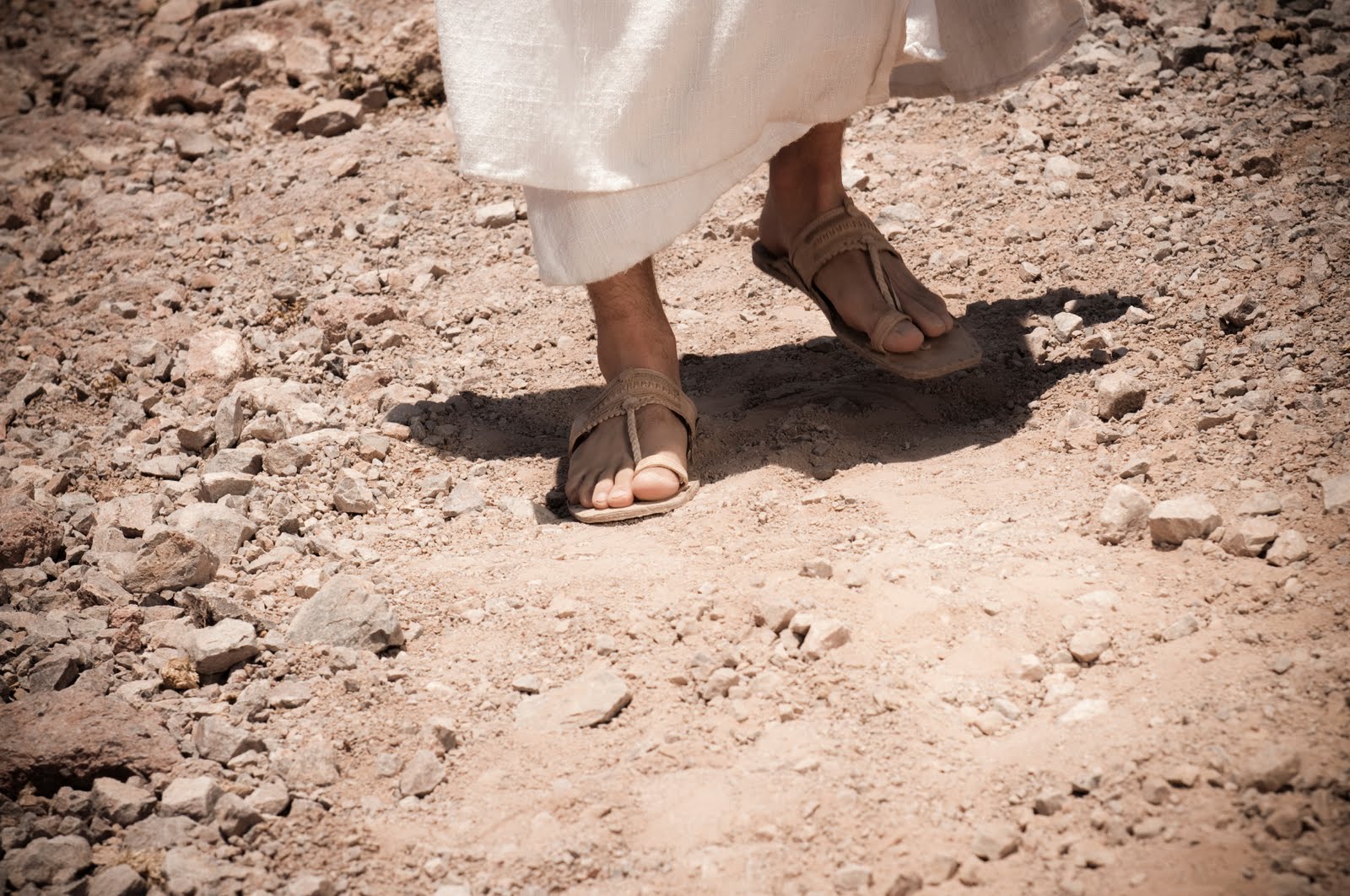
” Oh, the bitter shame and sorrow,jesus feet
That a time could ever be
When I let the Saviour’s pity
Plead in vain, and proudly answered,
“All of self, and none of Thee.”

Yet He found me; I beheld Him
Bleeding on the accursed tree;
Heard Him pray, “Forgive them Father;”
And my wistful heart said faintly,
“Some of self, and some of Thee.”

Day by day His tender mercy,
Healing, helping, full and free,
Sweet and strong, and ah! so patient,
Brought me lower while I whispered,
“Less of self, and more of Thee.”

Higher than the highest heavens,
Deeper than the deepest sea,
Lord, Thy love at last has conquered:
Grant me now my soul’s desire,
“None of self, and all of Thee.” ”

Hymn by Theodore Monod


3 Comments

Jesus Christ and the Brazen Altar – Part 2

When God instituted the Mosaic Covenant it was strictly with the nation of Israel. Why then do we, the people of the New Covenant, have an interest in studying it? The answer is varied, but one part of it is this:

  • through the Mosaic Covenant God showed forth some wonderful eternal truths pointing to His Son and the Church.

It is worth looking into these things because it adds layers and depth to our faith as God reveals these truths to us by His Spirit.

In the last post we saw the significance and typology of the materials used in constructing the Brazen

source: mudpreacher.org

source: mudpreacher.org

(or bronze) altar of the Tabernacle of Moses and we saw that the altar was a picture of the cross of Jesus Christ. In this post we will look at the significance of the blood of the altar and how this points to Christ’s atonement for us.

The Altar of Blood

Having just been confronted with the 7.5 feet high linen walls of the Tabernacle, signifying God’s holy righteousness, the sinner enters through the one and only entrance of the Tabernacle – the Gate.

Now the first piece of furniture he encounters is the Brazen Altar. Imagine standing in front of this piece of furniture.  This is where where many, many innocent animals had been slain for the sins of the people. It was not a pretty picture. It was most likely intimidating. The altar was the place of death and blood. The place where the full penalty of sin became gruesomely obvious. “For the wages of sin is death” (Romans 6:23).

source. kenraggio.com

source. kenraggio.com

It represented sacrifice, death and blood atonement. For the sinner to proceed any further into the Tabernacle, innocent blood would need to be shed upon this altar on his behalf. Any attempt to bypass this step and approach God without blood would have resulted in death.

“….without the shedding of blood there is no remission (forgiveness of sins)” Hebrews 9:22

No one, not even the High Priest, could approach the Lord except on the basis of innocent shed blood.

For the life of the flesh is in the blood, and I have given it to you upon the altar to make atonement for your souls; for it is the blood that makes atonement for the soul.” Leviticus 17:11

The altar demonstrates that the only way a person can meet with God is on the basis of substitutionary atonement. On the basis of BLOOD.

The Blood Covenant

In fact, the Mosaic Covenant became known as the “Blood Covenant” (Hebrews 9:19, 20) due to the huge number of animals that were sacrificed.

“This elaborate sacrificial system with its multiplied continual sacrifices was given for two major reasons.

  • First, it was to illustrate that no amount of continued animal sacrifices could effectively take away man’s sinfulness.
  • Second, it was to point to Christ’s perfect, sinless, and once-for-all sacrifice that could take away man’s sinfulness (Hebrews 9,10).” source (1)

God instructed the Israelites to bring offerings to Him on the Brazen Altar:

Sacrifice Verses Elements Purpose
Burnt Offering Lev 1; Lev 6; Lev 8; Lev 16:24 Bull, ram or male dove. Must be a male without blemish Atonement for unintentional sin; act of worship
Grain Offering Lev 2; Lev 6:14-23 Grain, fine flour, olive oil, incense, baked bread, salt. Always accompanied burnt and fellowship offerings (with drink offerings Act of worship, recognition of God’s goodness and provision; devotion to God
Fellowship/Peace Offering Lev 3; Lev 7:11-34 Any animal without defect or blemish from herd of flock; breads Act of worship, thanksgiving and fellowship (it incl a communal meal)
Sin Offering Lev 4; Lev; Lev 8; Lev 16 1.     Young bull for high priest and congregation

2.     Male goat for leader

3.     Female goat/lamb for common person

4.     Dove/pigeon for the poor

5.     10th of an ephah of fine flour: for the very poor

Mandatory atonement for specific unintentional sin; confession of sin, cleansing from defilement.
Guilt/Trespass Offering Lev 5:14-6:7

Lev 7:1-6

Ram Mandatory atonement for unintentional sin requiring restitution; cleansing from defilement; make restitution; pay 20% fine

Table adapted from NIV Study Bible


The Altar & the Blood Point to Christ

“…he must bring to the LORD a young bull without defect as a sin offering for the sin he has committed. He is to present the bull at the entrance to the tent of meeting before the LORD. He is to lay his hand on its head and slaughter it there before the LORD.” Leviticus 4:3, 4

Just as the innocent animal became an offering for the sin of the Israelites, so too Jesus became an offering for the sins of the whole world. The New Testament says:

For He made Him who knew no sin to be sin for us, that we might become the righteousness of God in Him.” 1 Corinthians 5:21

So we see the Altar is a type of Christ because He is:

source:wordlive.org

source:wordlive.org

  • A substitutionary atonement for us,
  • Blemishless because He never sinned,
  • The innocent substitution on our behalf

At the cross Jesus’ blood was poured out and He took the judgment for our sins upon Himself.  All of the animal sacrifices upon the altar pointed to the ultimate sacrifice of God’s perfect, blemishless Son, Jesus Christ. Jesus death upon the cross fulfilled all of the Old Testament sacrifices and did away with them once and for all.

But Christ came as High Priest of the good things to come,with the greater and more perfect tabernacle not made with hands, that is, not of this creation. Not with the blood of goats and calves, but with His own blood He entered the Most Holy Place once for all, having obtained eternal redemption.  For if the blood of bulls and goats and the ashes of a heifer, sprinkling the unclean, sanctifies for the purifying of the flesh,  how much more shall the blood of Christ, who through the eternal Spirit offered Himself without spot to God, cleanse your conscience from dead works to serve the living God?” Hebrews 9:11-14

Next post….

  • Outside the Camp
  • How the altar points to the cross

Sources: 1 The Mosaic Covenant, Kevin J Conner & Ken Malmin


5 Comments

God’s Victories Look Like Defeats

In Suffering: According to the Pattern, we saw that Calvary is the pattern. And if we are God’s child He will deal with us according to the pattern.

“That is the strange lesson we all have to learn, and Calvary is the pattern of it from beginning to end. God’s victories look like defeats. It is victory in the unseen realm while one is apparently, absolutely down and out in the visible.” Prayer and Evangelism, Jessie Penn-Lewis (emphasis mine).

Therefore if Calvary is the pattern, then we know that the pattern is of suffering because we know that Christ our Lord and

sacredsharingsforthesoul.blogspot.com

sacredsharingsforthesoul.blogspot.com

Saviour suffered.  Conversely we also know that if the pattern is of Calvary, then the pattern is also of victory because we know that through suffering our Lord was greatly victorious.

If we are the disciples of Jesus Christ, then we will too be greatly victorious in Him. However, it is through suffering that the victory will be won. This was true of Paul, of Peter and of all the apostles. And it is true of us too.

“The disciple is not above his master: but every one that is perfect shall be as his master.” Luke 6:40

We know the story of Peter denying Christ thrice. We know that Jesus, in His mercy, sought Peter out after the resurrection and restored him. The interesting thing is that once Jesus had restored Peter, He prophesied over him. Jesus foretold to Peter the actual pinnacle of his life for God – the very event that would bring the greatest glory to God.

It is interesting to note that Jesus’ prophesy excluded the fact that Peter was to be always happy, healthy and eventually own his own private jet. Why is that? Surely that would bring God the most glory! No, rather, what Jesus told Peter was something according to the pattern:

“’Most assuredly, I say to you, when you were younger, you girded yourself and walked where you wished; but when you are old, you will stretch out your hands, and another will gird you and carry you where you do not wish’. This He spoke, signifying by what death he would glorify God. And when He had spoken this, He said to him, “Follow Me.”” John 21:18, 19 (emphasis mine)

Peter was to glorify God by being crucified!

How could this bring glory to God? This really goes against the grain of our own thinking….

But remember: God’s victories look like defeats.

deny selfConsider for a moment this man, Peter.  He had fearfully denied Jesus over and over again in order to preserve his own life and avoid the agony and humiliation of the cross. Could it be possible that this man would one day be so given to Christ, so full of the Holy Spirit that the fear of pain and death, the fear of the loss of his reputation would be so victoriously overcome that he would eventually take up his cross and follow Christ?

Jesus knew that the one thing Peter wished to avoid the most was the very thing that would bring God the most glory!

You see, Self is always trying to preserve Self (ie. Self-preservation). Self, or the “flesh”, cries out for comfort, for ease, for safety, to be liked and accepted. Feed me! Please me! Preserve me above all else! It is only when the power of the flesh has been broken that it is able to come under the dominion of the Holy Spirit. Unfortunately the flesh in man is strong. So strong that it usually takes the rod of suffering to break its strength throughout a lifetime.

The flesh was also strong in Peter. He was, of course, no different from the rest of us, and yet this man was eventually crucified for the glory of God. What happened in-between his restoration by Christ and his death that effected this transformation? The answer is : the Holy Spirit.

It is “…Christ in you the hope of glory” Colossians 1:27 (emphasis mine).

It is God’s ultimate purpose to conform us to the image of His Son. It is God’s will to work His Son in us by His Spirit. Contrary to what we may imagine, God isn’t a dispensary, dishing out to our flesh an ounce of love, a pound of patience etc in order to improve it. This would be futile. Why? Because judgment has been pronounced on the flesh and now it must die. Our only hope is God coming to live in us by the power of His Spirit. God doesn’t give us more love and more patience, but what He does is work in us His very Son. Christ’s nature is loving, truthful, patient and kind and so the more of Christ that has been worked in us, the more His nature will naturally shine through us. In order for this to be able to happen the flesh will have to be crucified. And that’s always going to be painful.

God’s victories look like defeats.

We think of victory as our lives always being smooth and easy. We believe when we are happy and healthy we are being blessed and when we are sad or sick, we are not so blessed. Perhaps we have done something wrong? But God’s perspective is totally different. His ways are higher than our ways, His thoughts higher than our thoughts.

Key Point: If God’s purpose is to conform us to the image of His Son, then whatever happens in our lives to achieve that end is victory.

Be encouraged that God has a much greater purpose than we can see at this time. What you and I are currently facing is intended to bring death to Self in order to allow the Spirit of life to work in us. If we yield to His hand He will bring forth a great victory in us and through us. And God will be glorified.

Next post ….. From Confinement to Enlargement


3 Comments

Suffering: According to the Pattern

th2VB52JDDI have asked God about suffering, especially lately. I have read and studied the Word. I certainly do not know the answer to it all, not even close. But one thing I have noticed is that the Church, in general, seems to no longer teach on suffering nor sanctification.

Why?

In this generation there is so much suffering, look at the situation in Nepal for example.  There are so many trials, battles and griefs that one would logically assume that the Church would be teaching volumes on this subject in order to bring hope, comfort and direction. However the opposite seems to be true. Instead of solid teaching in this area there seems to be a proliferation of the Health, Wealth and Prosperity false gospel.

So I have felt the Holy Spirit prompting me to do a little series on suffering and sanctification. I would like to share with you some of what I have learned through my own hard experiences in order to “strengthen the souls of the disciples, (and) exhort (you) to continue in the faith…” Acts 14:22

According to the Pattern

“That is the strange lesson we all have to learn, and Calvary is the pattern of it from beginning to end. God’s victories look like defeats. It is victory in the unseen realm while one is apparently, absolutely down and out in the visible.” Prayer and Evangelism, Jessie Penn-Lewis (emphasis mine).

The pattern is suffering. And if we are God’s child He will deal with us according to the pattern.

When Christ died on the cross it seemed that evil had triumphed. Isaiah 53:3,4 says:

“He is despised and rejected of men; a man of sorrows, and acquainted with grief: and we hid as it were our faces

source: mudpreacher.org

source: mudpreacher.org

from him; he was despised, and we esteemed him not. Surely he hath borne our griefs, and carried our sorrows:

yet we did esteem him stricken, smitten of God, and afflicted.”

Through His great suffering and death it seemed that all hope was lost and that Satan had triumphed. But this was only how it seemed in the natural realm. This is how it looked to human eyes. In reality, the cross was the place of Christ’s ultimate triumph over death, hell, sin and the devil. Sinners are delivered from sin, Satan must relinquish a captive, death is overcome and hell loses one more inhabitant – because of the cross.

What seemed so despicable, so contemptible, so utterly humiliating was the place of total and complete victory. As believers our eyes have been opened to the victory of Christ’s death and of course His subsequent resurrection. But to unbelievers the preaching of the cross is still regarded as meaningless foolishness.

Definition of

Definition of “Pattern”: a regular and intelligible form or sequence discernible in the way in which something happens or is done

And so is suffering. To the world suffering is meaningless, utterly contemptuous and something to be avoided at any cost. But as Christians, once again, our eyes are opened.  Just as we see Christ’s sufferings were for an eternal purpose, so we need to see that once we are God’s child, so too are our sufferings. We don’t need to suffer for our own sins, Christ has done that once for all, but there is always a purpose to the suffering of a child of God. It is easy just to see the immediate circumstances before us, but God is interested in eternal values.

“For our light affliction, which is but for a moment, works for us a far more exceeding and eternal weight of glory.” 2 Corinthians 4:17

And because of the cross, there is always a victory.

Next post…. God’s Victories Look Like Defeats


8 Comments

Jesus Christ and the Brazen Altar

The significance of the Brazen (or Bronze) Altar is huge.  This post will be followed up by two

source: blingcheese.com

source: blingcheese.com

more on the Brazen Altar, in order to attempt to cover as much as possible its incredible importance and typology.

Firstly the word “altar” means “slaughter place”, “high” or “lifted up”.

The Materials and Measurements of the Altar

In Exodus 27:1-8 God tells Moses how to make the altar:

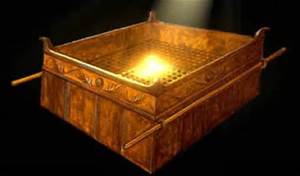
“You shall make an altar of acacia wood, five cubits long and five cubits wide—the altar shall be square—and its height shall be three cubits. You shall make its horns on its four corners; its horns shall be of one piece with it. And you shall overlay it with bronze. Also you shall make its pans to receive its ashes, and its shovels and its basins and its forks and its firepans; you shall make all its utensils of bronze. You shall make a grate for it, a network of bronze; and on the network you shall make four bronze rings at its four corners. You shall put it under the rim of the altar beneath, that the network may be midway up the altar. And you shall make poles for the altar, poles of acacia wood, and overlay them with bronze. The poles shall be put in the rings, and the poles shall be on the two sides of the altar to bear it. You shall make it hollow with boards; as it was shown you on the mountain, so shall they make it.”

(The material used in both the Brazen altar and the Brazen laver was either brass or bronze, but more likely bronze because it was discovered much earlier than brass.  Bronze and brass are a very similar metal, both made from copper.  Bronze is made from a mixture of copper and tin and is a hard, non-corrosive metal.)

In Jesus and the Tabernacle Materials we looked at the materials used in the construction of the Tabernacle.  We saw that each material was deliberate and represented something important.

Looking at the Bronze Altar, we see it was made from acacia wood overlaid with bronze:

  • Bronze/Brass :             Representing Judgment against sin
  • Acacia wood  :             Representing the incorruptible humanity of Christ


God gave Moses the exact measurements for everything in the tabernacle.  Nothing was left to chance or Moses’ own decision.  God specified that the Altar was to be 5×5 cubits wide and long.  It was to be 3 cubits high.  It had 4 horns, one on each corner.

5   is the number of grace, the number of atonement

3 is the number of the Godhead (ie, the trinity: God the Father, God the Son and God the Holy Spirit).

4  is the number of earth (the 4 seasons, the 4 winds, the 4 corners of the earth) and the creation

Summary:  It is clear that from the materials used in the Altar and its measurements we can see that the Altar represents:

  • God’s judgment against sin
  • Sacrificial atonement
  • Christ’s incorruptible human nature
  • Grace
  • Atonement
  • The Godhead/trinity
  • The whole earth

As noted earlier the word “altar” means “slaughter place”, “high” or “lifted up”.

Jesus Himself said :

As Moses lifted up the serpent in the wilderness, even so must the Son of Man be lifted up…” John 3:14

And “And I, if I am lifted up from the earth, will draw all men to Myself. But He was saying this to indicate the kind of death by which He was to die” John 12:32, 33

When Jesus was crucified He was the offering for sin upon God’s appointed altar – He was lifted up from the earth upon the cross.

The next post will cover:

  • The significance of blood
  • The offerings of the Brazen altar


12 Comments

Jesus and the Outer Court of the Tabernacle

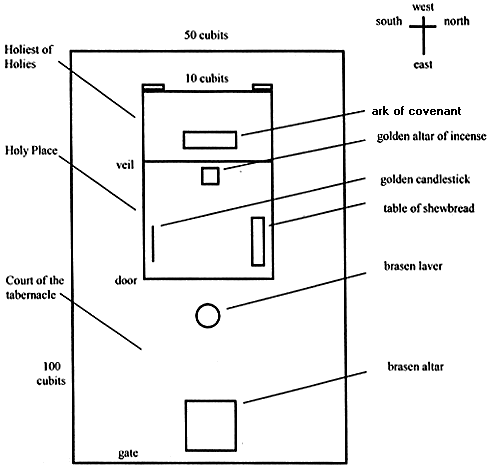
The Outer Court (or Court of the Tabernacle) points to Jesus

source: ferrelljenkins.wordpress.com

source: ferrelljenkins.wordpress.com

Christ, just as does every part of the Tabernacle of Moses.  In this post we will see the beautiful picture of the holiness and the redemption of Jesus Christ in the walls and gate of the Outer Court.

Exodus 27:9-18

You shall also make the court of the tabernacle. For the south side there shall be hangings for the court made of fine woven linen, one hundred cubits long for one side. 10 And its twenty pillars and their twenty sockets shall be bronze. The hooks of the pillars and their bands shall be silver. 11 Likewise along the length of the north side there shall be hangings one hundred cubits long, with its twenty pillars and their twenty sockets of bronze, and the hooks of the pillars and their bands of silver.

12 “And along the width of the court on the west side shall be hangings of fifty cubits, with their ten pillars and their ten sockets. 13 The width of the court on the east side shall be fifty cubits. 14 The hangings on one side of the gate shall be fifteen cubits, with their three pillars and their three sockets. 15 And on the other side shall be hangings of fifteen cubits, with their three pillars and their three sockets.

16 “For the gate of the court there shall be a screen twenty cubits long, woven of blue, purple, and scarlet thread, and fine woven linen, made by a weaver. It shall have four pillars and four sockets. 17 All the pillars around the court shall have bands of silver; their hooks shall be of silver and their sockets of bronze. 18 The length of the court shall be one hundred cubits, the width fifty throughout, and the height five cubits, made of fine woven linen, and its sockets of bronze.

The Materials of the Outer Court

As we saw in Jesus and the Tabernacle Materials every item used in the construction of the Tabernacle had a divine purpose and meaning:

  • The walls of the Outer Court were made from hangings of fine woven linen = the Righteousness of Christ
  • Its 20 pillars and 20 sockets for the pillars were made of bronze = judgment against sin
  • The hooks and bands of the pillars were made of silver = redemption

The Outer Court is a picture of Christ. Christ came in His righteousness as our redemption. He took our place, as a substitutionary atonement in God’s judgment against sin.

The Outer Court and the Law of God.

source: signature9.com

source: signature9.com

The Outer Court is also a picture of the Law of God. The Tabernacle was surrounded by a wall of fine linen hangings. This wall kept the Holy of Holies, where God’s Shekinah Glory dwelt, separate from the outside world. Each person upon approaching God’s dwelling place, the Tabernacle, was confronted by this huge 7.5 foot-high wall of fine linen.

As we know, fine linen speaks to us of righteousness. At the front of the Tabernacle an individual was confronted with the wall of the holy standard of God’s righteousness upon their approach to Him. How could they enter this holy and righteous place? How could they scale this wall of righteousness? How could they get to a holy God?

The Bible says “But your iniquities have separated you from your God; And your sins have hidden His face from you, So that He will not hear” Isaiah 59:2

The sinner is separated from the holiness of God because of the defilement of his sin. The fact is, the sinner cannot approach a holy God in his own righteousness. The Bible says that:

“…we are all like an unclean thing, And all our righteousnesses are like filthy rags;” Isaiah 64:6

Just as each person was confronted with the wall of God’s righteousness at the Tabernacle, so this is true of today as well. Each sinner needs to be confronted with God’s holy bible-cover-pagerighteousness – His Law, the 10 commandments, to see that he cannot measure up to God’s standards of holiness. God is perfectly good, perfectly Holy, perfectly righteous. But we are not.

For all have sinned and fall short of the glory of God.” Romans 3:23

Once we are confronted with His righteousness we see that there is no way to scale the wall into His righteousness. There is no way we can get in on our own.

We are lost, without hope.

But…the Outer Court had a Gate.

The GATE

source: poliges.com

source: poliges.com

“For the gate of the court there shall be a screen twenty cubits long, woven of blue, purple, and scarlet thread, and fine woven linen, made by a weaver…”

God, in His marvelous grace, has of course made a way into His presence.

But…. there is only ONE way. And that is through His Son, the Lord Jesus Christ.

An individual could only enter the Outer Court through one gate on the east side of the Tabernacle.

The walls were so high that anyone trying to climb over them could have plunged to their death. This speaks of the sinner trying to work his way, or climb his way, up to God. It doesn’t work, for we will never be good or holy enough to meet God’s standards. The way of the flesh only leads to death.

“Very truly I tell you Pharisees, anyone who does not enter the sheep pen by the gate, but climbs in by some other way, is a thief and a robber.” John 10:1

But there was this gate and it was the way, the only way, into the presence of God, into Life. The gate had a screen woven of blue, purple and scarlet thread as well as fine linen.

Jesus Himself said: “I am the gate; whoever enters through me will be saved…” John 10:9 (NIV)

The gate, of course, speaks to us of Christ:

  • The fine linen= His righteousness,
  • The colours = His heavenly nature (blue), His royalty (purple) and His sacrifice (red).
source: catechismway.blogspot.com

source: catechismway.blogspot.com

We see that there is only one way into the presence of a Holy God, and that is through the gate, the Person of Jesus Christ.

Jesus said I am the Way, the Truth and the Life. No man comes to the Father except through me.” John 14:6

Just as none could enter the Tabernacle and approach God from any other way except through the gate, so it is the same today. No one can approach God any other way than through Jesus Christ.

We come through Him, we come through the Gate.

Going through the gate we enter through Him. We come through His righteousness (linen), His heavenly nature (blue), His Kingship (purple) and His sacrifice (scarlet).

Then when a person was in the Outer Court of the Tabernacle they too were separated from the world. This speaks of the holiness of God and the separation of man from the world unto Him.

Upon entering through the Gate, immediately the individual is met with the Brazen Altar.

Next post:   Jesus and the Brazen Altar

Previous post: Jesus and the Tabernacle Materials


10 Comments

The Tabernacle of Moses and Jesus

source: templestudy.com

source: templestudy.com

God gave Moses a divine plan in building the Tabernacle :

“According to all that I show you, that is, the pattern of the tabernacle and the pattern of all its furnishings, just so shall you make it.” Exodus 25:9

Moses was required to build the tabernacle exactly to the plan which God gave Him.

“They served in a system of worship that is only a copy, a shadow of the real one in heaven. For when Moses was getting ready to build the Tabernacle, God gave him this warning: “Be sure that you make everything according to the pattern I have shown you here on the mountain.”” Hebrews 8:5

It was divided into three different areas within it.

source: tabernacleofmoses.org

source: tabernacleofmoses.org

There was the Holy of Holies, the Holy Place and the Outer court.

Each area had its own pieces of furniture. The furniture was also to be made exactly to the pattern that God gave Moses.


The Purpose of the Tabernacle

When Moses was on the mountain with God, God said to him:

“…let them make me a sanctuary, that I may dwell among them.” Exodus 25:8

The purpose of the Tabernacle was for God to dwell among His people, in order to guide them and to bless and provide for them.

God has always desired fellowship with man. We see this with God’s dealings with Adam and Eve, with Israel and with the followers of Christ – His Church. In fact the Tabernacle of Moses points ultimately to Jesus Christ as it is a picture of God dwelling amongst man.

In John 1:14 we read:

“And the Word became flesh and dwelt among us, and we beheld His glory, the glory as of the only begotten of the Father, full of grace and truth.”

The word “dwelt” here literally means to “pitch a tent”. It is from the Greek word skenoo

“…This word skene (tent) is the very word used in the New Testament to refer to the tabernacle of God used by Israel in their early worship of God. If you remember, the tabernacle was a wooden structure with a tent pitched over the top. In the Greek New Testament therefore, the word translated “tabernacle” is skene — “the tent” (Acts 7:44; Hebrews 8:2, 5, and chapter 9). Hence, when the glory of God descended to the earth to take up residence in the midst of Israel as described in Exodus 40:34-38, it could be said that God “pitched His tent” among men. The writer of the book of Hebrews calls it “the true tent [skene] that the Lord set up” (Hebrews 8:2). The glory of God went camping with Israel as Israel wandered in the wilderness.” (source: http://www.awordfromtheword.org/dwelt)

When Jesus became a Man and dwelt among us, it was the ultimate fulfillment of the Tabernacle of Moses. Here was God not only dwelling amongst human beings, but God dwelling in human flesh Himself. How merciful that God would take on human flesh to bring about fellowship with man again!

And now, as believers in Christ, God Himself dwells (tabernacles) in us. By His Holy Spirit God now dwells not only with man, but inside of man. The incredible kindness and mercy of God!

“Or do you not know that your body is the temple of the Holy Spirit who is in you, whom you have from God, and you are not your own? ” 1 Corinthians 6:19 

The Glory of God

We also see that where God dwells, He sends His glory.  It is God’s desire that His glory is seen where He dwells.  Back then it was in the Tabernacle, now it is in us.  In eternity it will be in the New Jerusalem.

  • Once the Tabernacle was completed the cloud of God’s glory filled the tabernacle, Exodus 40:34-38
  • When Solomon completed the Temple, the glory of God filled the Temple, 2 Chronicles 7:1-3
  • God’s glory was seen in the Person of Jesus Christ as He walked the earth: “And the Word became flesh and dwelt (tabernacled) among us, and we beheld His glory, the glory as of the only begotten of the Father, full of grace and truth.” John 1:14

On the Mount of Transfiguration, Jesus is transfigured and becomes radiant in glory, Matthew 17:1-8; Mark 9:2-8; Luke 9:28-36

“… he was transfigured before them, and his clothes became radiant, intensely white, as no one on earth could bleach them… a cloud overshadowed them, and a voice came out of the cloud, “This is my beloved Son;  listen to him.” Mark 9:2-7

  • Right now in the Church , it is “Christ in you, the hope of glory” Colossians 1:27 and see also 2 Corinthians 4:1-7
  • In the age to come the Glory of God is resplendent in the New Jersusalem, Revelation 22:9-27

“The city had no need of the sun or the moon to shine in it, for the glory of God illuminated it.” (Verse 23)

Summary

The Tabernacle of Moses shows us many things:

  • That God desires fellowship with His people;
  • That God always is the one to initiate fellowship between Him and man;
  • That God has a plan to bring that fellowship about;
  • That God clearly shows man how to have fellowship with Him
  • That man must approach God in the way in which God appoints;
  • That the tabernacle points to Christ dwelling with and in man
  • That Christ is the ultimate fulfillment of the tabernacle and
  • That God’s glory is seen where He dwells

Blessings in Christ! 

Next…The Tabernacle of Moses and the Cross


2 Comments

In the Secret of His Presence

In the secret of His presence

Source: favim.com

Source: favim.com

  How my soul delights to hide!
Oh, how precious are the lessons
  Which I learn at Jesus’ side!
Earthly cares can never vex me,
  Neither trials lay me low;
For when Satan comes to tempt me,
  To the secret place I go

When my soul is faint and thirsty,
  ’Neath the shadow of His wing
There is cool and pleasant shelter,
  And a fresh and crystal spring;
And my Savior rests beside me,
  As we hold communion sweet;
If I tried, I could not utter
  What He says when thus we meet.

Only this I know: I tell Him
  All my doubts and griefs and fears;
Oh, how patiently He listens!
  And my drooping soul He cheers;
Do you think He ne’er reproves me?
  What a false friend He would be,
If He never, never told me
  Of the sins which He must see.

Would you like to know that sweetness
  Of the secret of the Lord?
Go and hide beneath His shadow;
  This shall then be your reward;
And whene’er you leave the silence
  Of that happy meeting-place,
By the Spirit bear the image
  Of the Master in your face.

Ellen Lakshmi Goreh, 1853


16 Comments

God’s Storehouses in Famine

God has been showing me that right now we are entering a new season. Right now we are leaving behind the years of “plenty” and entering into the years of “famine”.

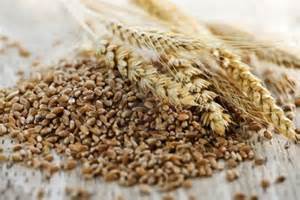
In Amos 8:11 we read:grain

““Behold, the days are coming,” says the Lord God, “That I will send a famine on the land, Not a famine of bread, Nor a thirst for water, But of hearing the words of the Lord.”

I believe He wants me to share with you that whilst there is coming a wide-spread famine of the Word of God, He has a plan – a plan of mercy. And this plan is already well underway.

In Genesis 41 we read about another famine. One that spread throughout the whole world too. But of course back then God also had a plan.

God gave Pharoah two dreams. When no one could interpret their meaning, Joseph was summoned:

“Then Joseph said to Pharaoh, “The dreams of Pharaoh are one; God has shown Pharaoh what He is about to do: 26 

The seven good cows are seven years, and the seven good heads are seven years; the dreams are one. 27 And the seven thin and ugly cows which came up after them are seven years, and the seven empty heads blighted by the east wind are seven years of famine. 28

 This is the thing which I have spoken to Pharaoh. God has shown Pharaoh what He is about to do.

29 Indeed seven years of great plenty will come throughout all the land of Egypt; 30 but after them seven years of famine will arise, and all the plenty will be forgotten in the land of Egypt; and the famine will deplete the land. 31 So the plenty will not be known in the land because of the famine following, for it will be very severe.” (verses 25-31)

The first seven years were years of plenty. The second seven years were years of famine.

We know that seven in the Bible is used for perfection, divine completion. I believe God is saying now the first season of plenty is complete, it is over. Now we are entering the second phase: famine.

A famine of the Word of God.

However:

  • Just as God had a plan of mercy for the famine in Egypt, so too God has a plan for this famine. Just as God sent a man, Joseph, ahead to Egypt to prepare for the coming famine, so too has God sent a Man to prepare for this one.
  • Just as Joseph went out from the presence of Pharoah to prepare for the coming famine, so too has Jesus Christ gone out from the presence of the Father to prepare for this coming famine.

If we look at Joseph’s plan, we see that it was quite simple. In the first season of the seven years of plenty, he stored up one-fifth of the food that was grown in local storehouses all across Egypt.

Kashan_granary_Barry_Kent

Kashan_granary_Barry_Kent

“So (Joseph) gathered up all the food of the seven years which were in the land of Egypt, and laid up the food in the cities; he laid up in every city the food of the fields which surrounded them” Genesis 41:48

In His sovereignty God knew this famine was coming. In His sovereignty God had sent ahead of it a man to bring about His plan of mercy, so that the: “food shall be as a reserve for the land for the seven years of famine which shall be in the land of Egypt, that the land may not perish during the famine.” Genesis 41:36

Likewise Jesus Christ, by His Holy Spirit, has been gathering and building into God’s storehouses during this past season, in preparation for this coming famine.

Whilst Joseph used Pharoah’s stone or clay buildings to store away the grain, God has a very different type of building in which to store up His food.

It is us.

We are God’s storehouses. We are His plan for the coming famine. Into each of us He has been building day by day, year by year. Line upon line, precept upon precept, here a little, there a little.

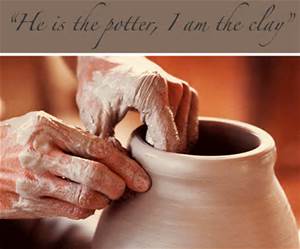
“…we have this treasure in earthen vessels…” 2 Corinthians 4:7

Whilst Pharoah used earthen buildings, God uses earthen vessels.potter

Whilst Joseph used the local storehouses to hold the grain, God uses the local Body of Jesus Christ to store up His divine Life.   Every time we pray, we hear from God, we read the Word, we worship Him, we talk to Him, we spend time with Him He is building into us the bread of Life. He is storing away the grain in us of the Bread of God.

“For the bread of God is He who comes down from heaven and gives life to the world.” John 6:33

Remember: God always has a plan. He is in control. He is Sovereign.

When the second season began – the season of famine, the “famine was in all lands, but in all the land of Egypt there was bread.” Genesis 41:54

There is a time coming soon where there will be no bread for this world apart from what Jesus Christ has stored up in His own storehouses – in us, His people.

At that time Jesus will open up all of His storehouses and “all that is in them” (Genesis 41:56) will be given out to the starving masses.

Notice that it is the work of God to prepare for the coming famine. He is the one who gathers, who stores and puts away the food in us. All that is required of us is that we are there, receiving from Him.

Like Pharoah’s buildings we just need to allow the food to be stored up in us, and when the time comes, we need to allow our Lord Jesus to open us up and to use us.

grain-pouringWe will be emptied for the sake of others. But it is when we give out, that He is able to pour more of His life into us again.

I want to encourage you brothers and sisters that the years past of your time with Christ, of pain, of suffering, of being built into… it is not in vain. It is for a purpose. God has been preparing His storehouses for such a time as this. Take heart, God sees you, He loves you, He is about to use you.

Building in, building in….in order to give out, give out.


God bless you!